
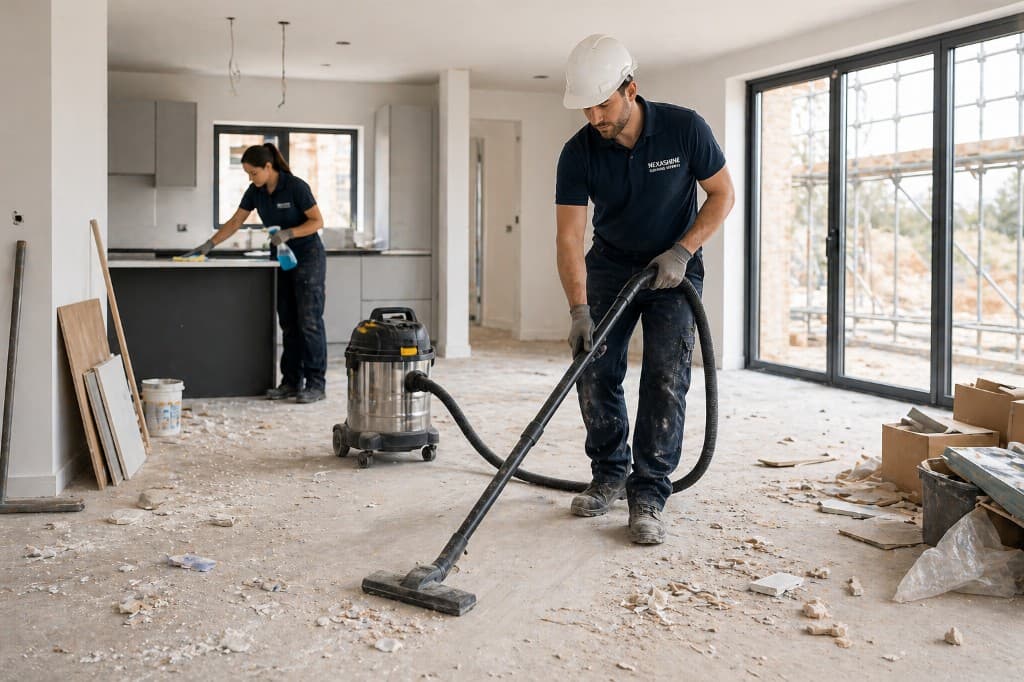
After Builders Cleaning
Post-construction cleaning designed to remove dust, debris and renovation residue safely and professionally.
A space can look finished while still holding plaster and silica-scale dust in cavities, on ledges and in carpet piles. After-build cleaning is heavy-duty restoration, not a quick tidy: we stage work so heavy material and packaging leave first, airborne dust is captured mechanically, and wet detailing only runs when surfaces won’t simply attract more film. That sequence protects new finishes, speeds handover, and avoids weeks of recurring dust.
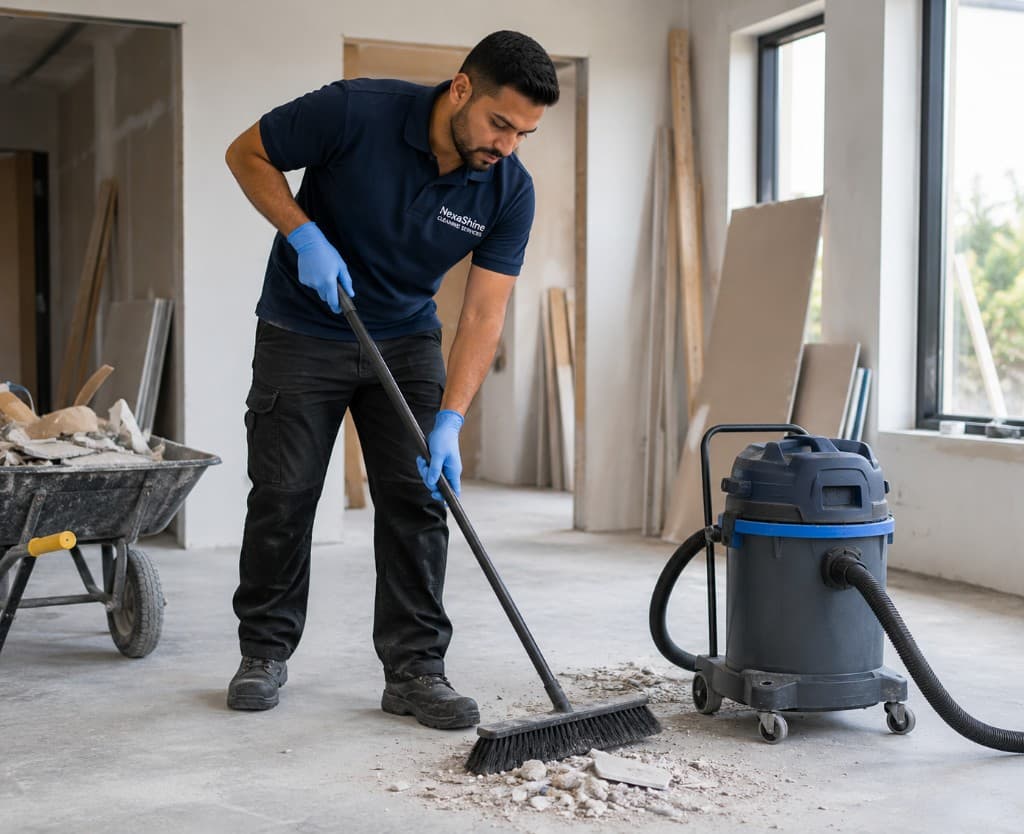
Initial debris removal
We start by clearing what trades leave behind—visible rubble, strapping, protection boards and packaging—so the building can be vacuumed and wiped without grinding grit underfoot. This phase is about safe access and honest sight lines before fine cleaning begins.
- Floors and threshold areas
- Window ledges and cills
- Corners, alcoves and service ducts (accessible)
- Skirting boards and architraves
- New fixtures, shelving and fitted units (externals)
- Entryways and circulation routes
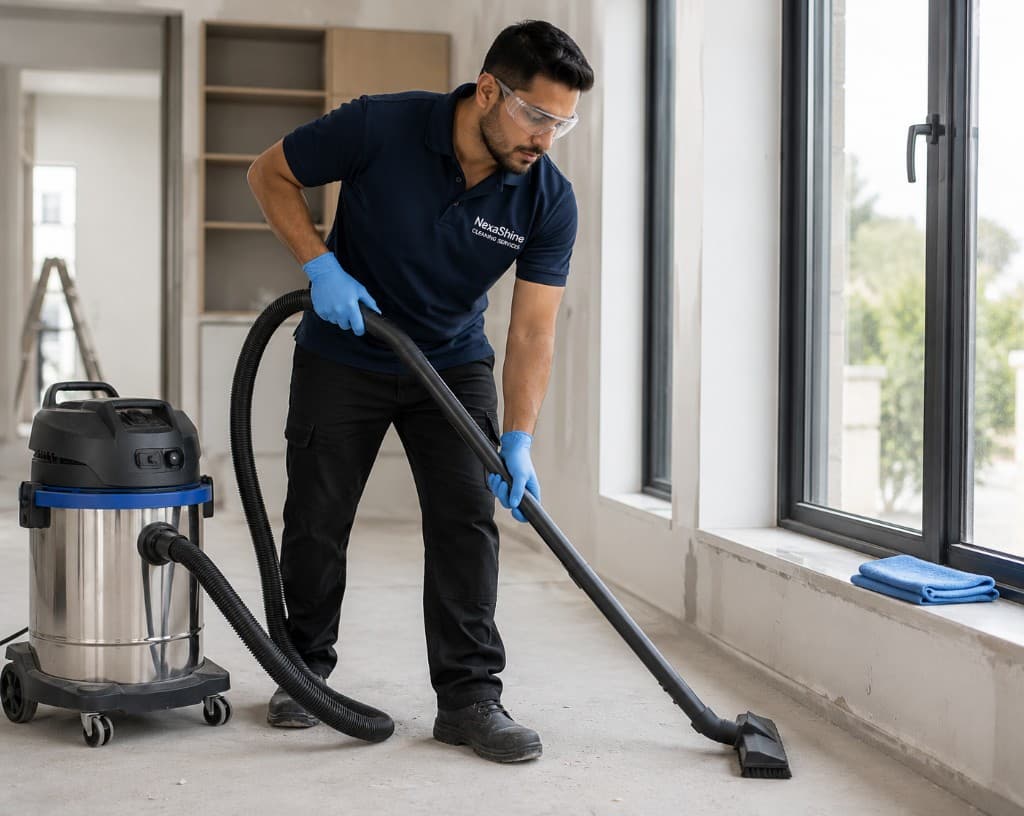
Dust extraction & air particles
Dust from plastering, sanding, cutting and chasing behaves like a reservoir: it resets onto horizontal surfaces whenever air moves. We work high-to-low and capture fines with filtration-led equipment rather than dry sweeping, which only redistributes particles into the air your team or clients will breathe.
What we use
- Industrial commercial vacuums with appropriate filtration for fines
- HEPA-grade or high-efficiency filter sets where the survey warrants them
- Microfibre dust capture on ledges, joinery and cabinetry—laundered as dedicated build-clean kit
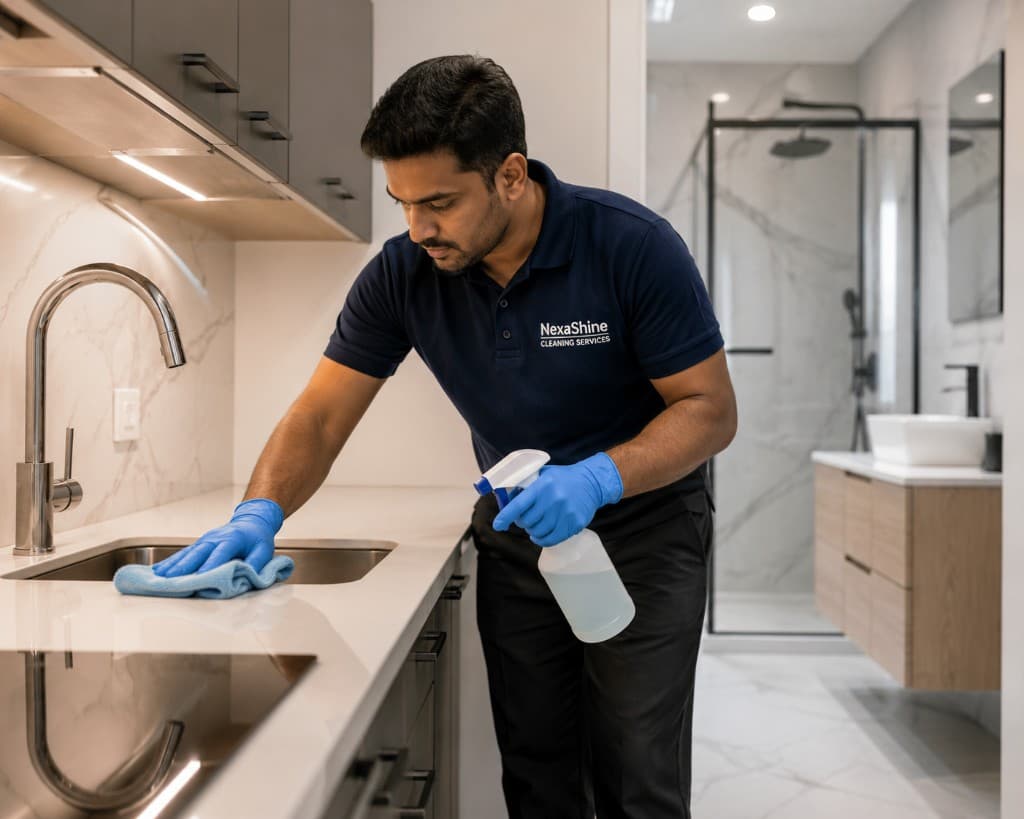
Kitchens & bathrooms
Newly fitted kitchens and washrooms often carry adhesive tails, silicone smears, dull dust film and light paint or mortar spatter. We soften and lift residues with methods matched to quartz, ceramic, enamel and glass—testing inconspicuous areas first—then sanitise and polish so handover photography looks intentional, not ‘just installed’.
- Adhesive marks and tape shadow lines
- Silicone and sealant residue (controlled softening)
- Fine dust film on fronts, fascias and sanitary ware
- Paint splatter and trade overspray (substrate-dependent removal)
- Installation residue on handles, hobs and trims
Before handover
- Surfaces are rinsed, dried and sanitised where appropriate so spaces are ready for first occupancy or client walk-rounds.
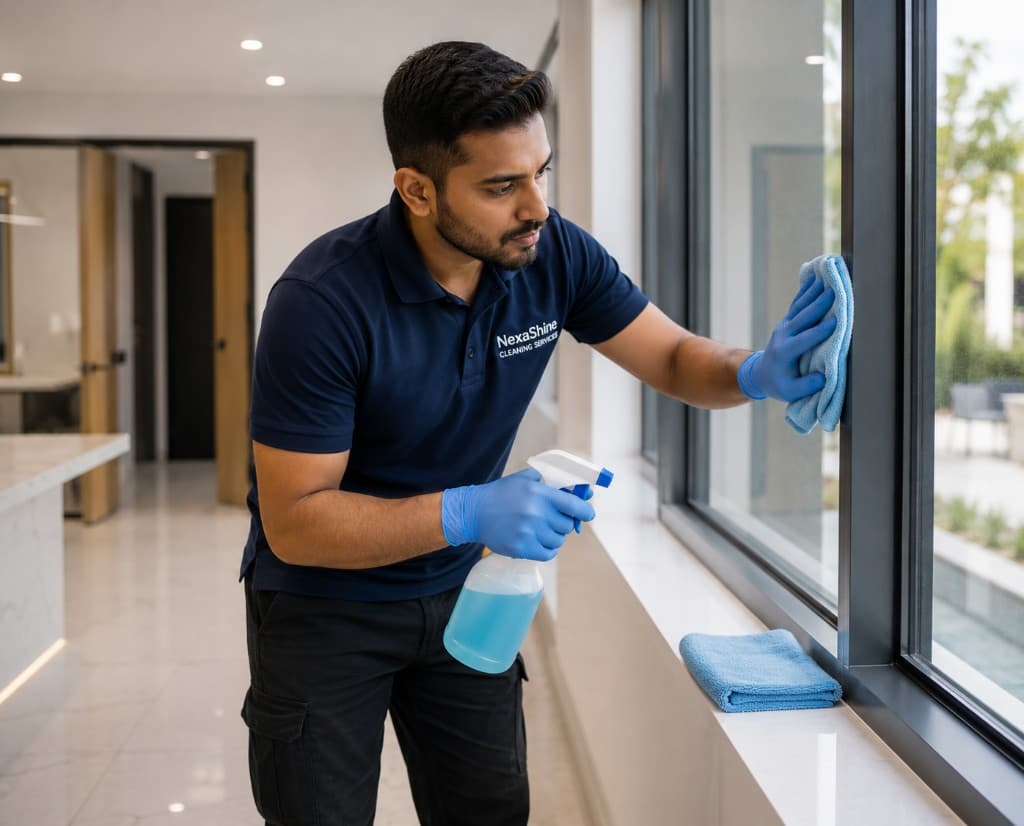
Final detail finishing
The last pass is about perception under natural and artificial light: smears on glass, finger marks on switches and dull spots on floors read as ‘unfinished’ to inspectors. We align this stage to your snag list or developer checklist where one exists.
- Internal glass and mirror polishing
- Door frames, jambs and architrave faces
- Light switches, sockets and visible trunking (dust-free)
- Worktop, sill and horizontal surface polish
- Hard-floor finish or spray-clean programmes appropriate to the seal coat
Ready for
- Occupancy, marketing viewings, client handover or commissioning visits—with presentation that matches the quality of the build.