Deep/Carpet Cleaning
Specialist carpet and upholstery cleaning designed to refresh fibres, remove stains and improve overall freshness.
This is a textile floorcovering and upholstery specialty—not a whole-house deep clean. Every visit starts with fibre identification and soil typing: the same stain behaves differently on polypropylene cut pile, wool blend, or office-grade loop carpet. We select chemistry, moisture level and agitation accordingly so you get lift on soil and stains without texture damage, colour bleed or excessive re-soiling from sticky residue.
Carpet inspection & pre-treatment
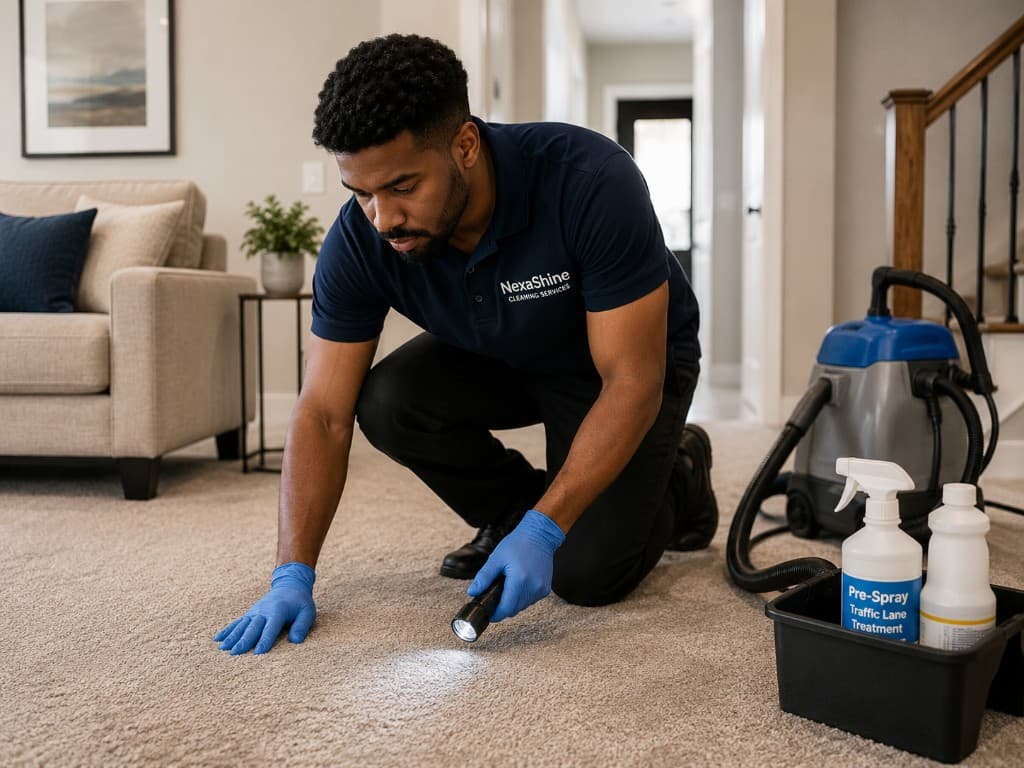
We survey traffic lanes, filtration soiling along skirting, spot history (pet, food, tannin) and any previous DIY attempts that can lock stains in. That determines vacuum passes, dwell time for pre-sprays, and whether a fibre test is needed before wet work.
- Foot traffic and shadowing in corridors or doorways
- Food and beverage spills
- Pet odours and protein soils (assessed before oxidisers)
- Embedded grit and dry particulate
- General or localised staining with chemistry noted on the survey
Pre-treatment
- Targeted pre-sprays or traffic-lane treatments are applied and given controlled dwell where the fibre and backing allow—never a one-formulation-fits-all approach.
Deep extraction cleaning
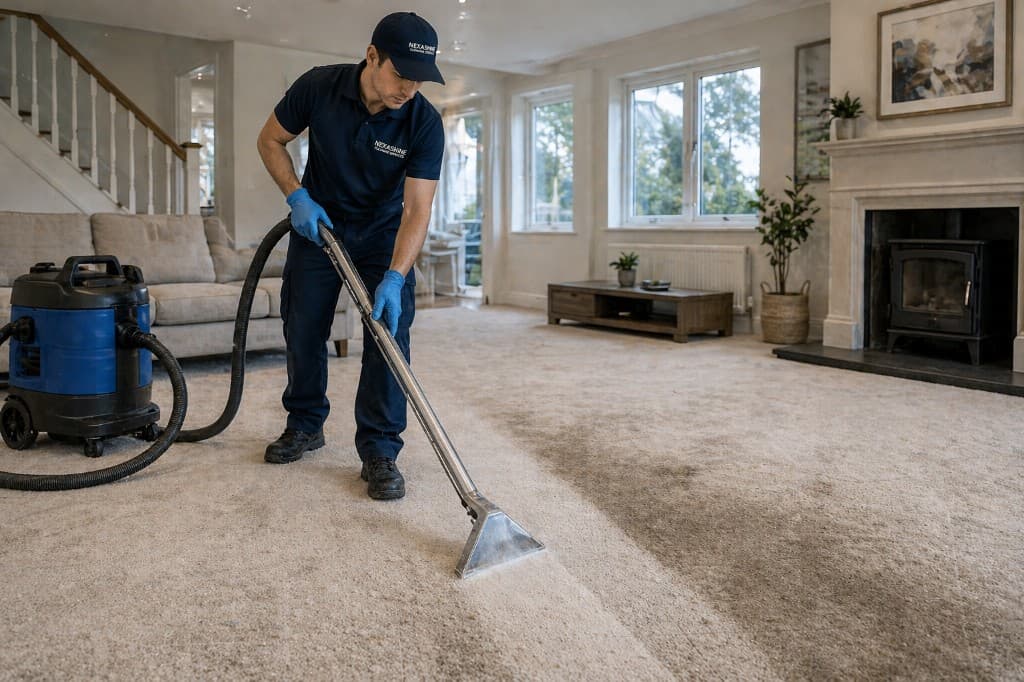
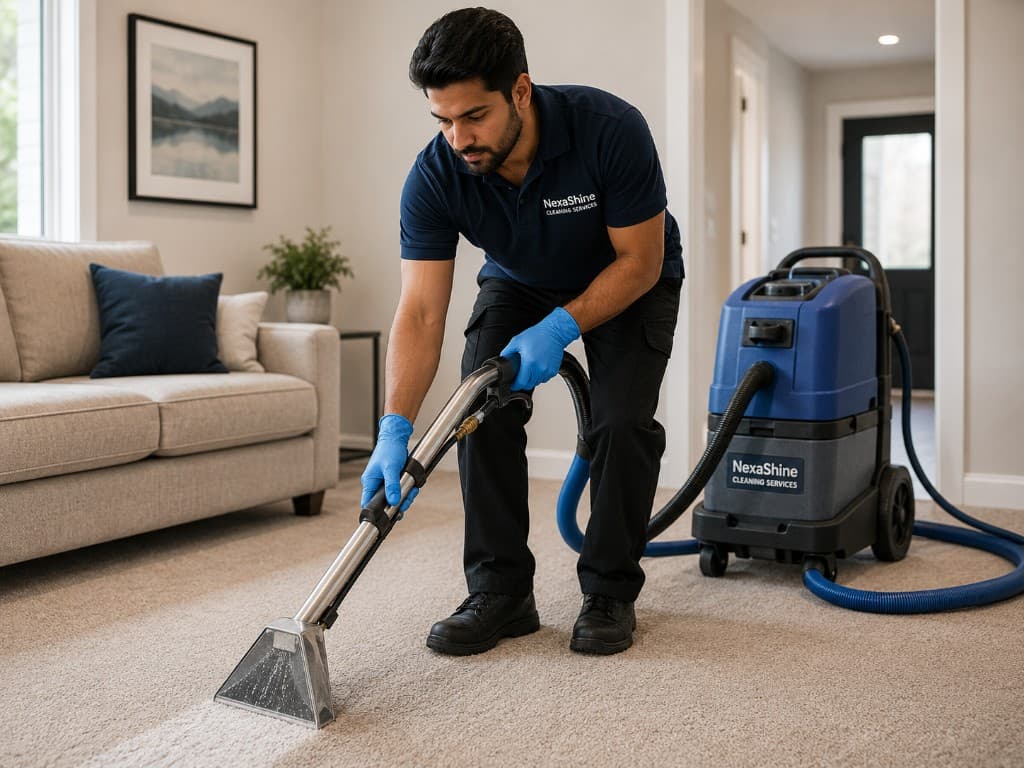
Extraction is about controlled moisture, temperature and vacuum recovery: enough water movement to flush soil from the bundle, not so much that latex backings, underlay or subfloors stay wet for days. We match method to pile height, density and access (stairs, landings, furniture perimeter).
Equipment may include
- Truck-mount or portable hot-water extraction (site-dependent)
- Low-moisture encapsulation or compound systems for fast re-entry where appropriate
- High-performance commercial carpet vacuums for dry soil removal before wet passes
Stain & odour treatment
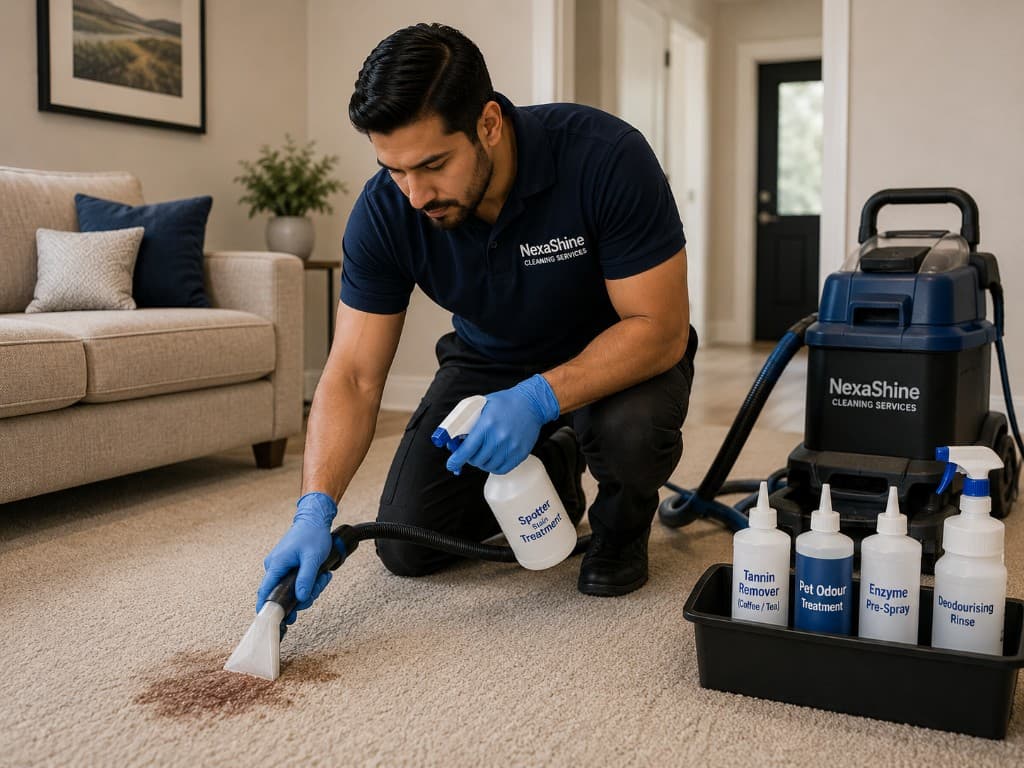
Spot work is isolated and sequential: identify, test, treat, extract, groom. We avoid stacking incompatible chemistry that can set tannin or protein stains. Odour control targets source removal first; masking agents are only discussed where the substrate is already sanitised.
- Coffee and tea (tannin chemistry)
- Mud and particulate tracks
- Food spills (oil and water-based separation)
- Pet odours after fibre-safe bactericidal treatment where booked
- Heavy traffic lanes after pre-agitation and extraction
Product selection
- Spotters and deodorising agents are chosen from the fibre survey—not supermarket labels—to protect warranty and appearance retention.
Fibre grooming & drying
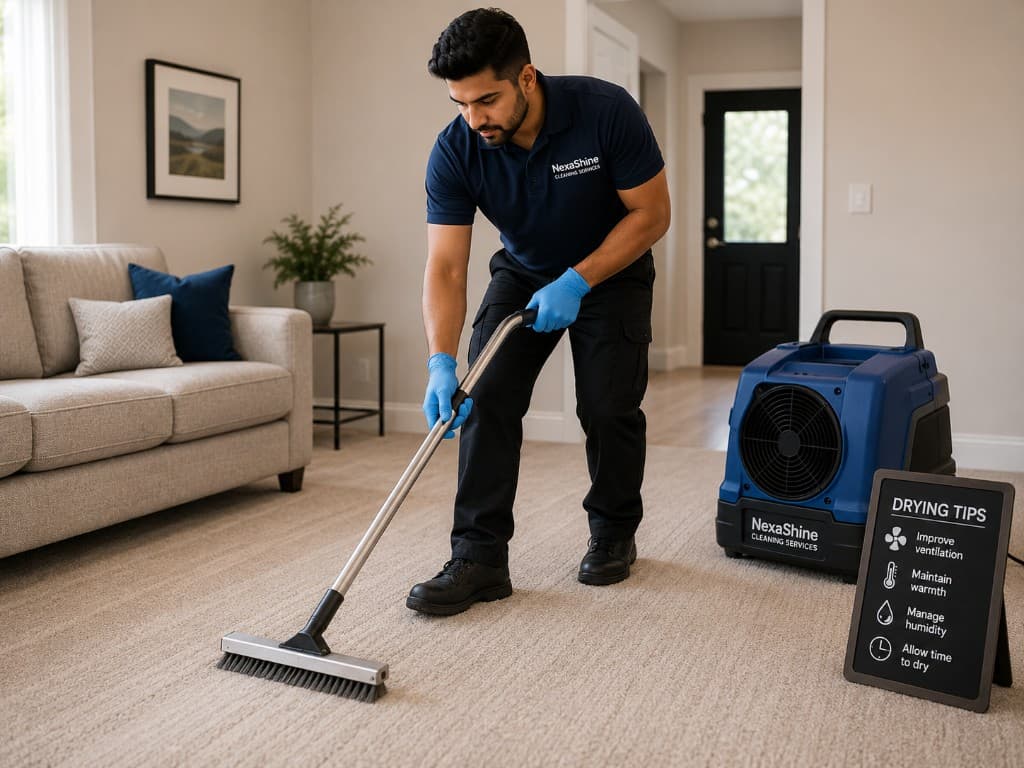
Post-extraction grooming aligns pile direction, reduces watermarking on cut pile, and helps evaporation across the face fibre. We discuss realistic dry times up front (humidity, heating, ventilation) so you can plan foot traffic or furniture replacement.
- Pile grooming with carpet rake or groomer appropriate to pile type
- Air movement and ventilation guidance to improve drying
- Lifted nap for a uniform appearance once dry
- Final walk-round and inspection against the agreed scope
Outcome
- The aim is refreshed appearance, reduced odour loading, and fibres that feel resilient underfoot—not a rushed ‘wet and go’ pass.